
-
 Call Us +0757 82252350
 -
 Email Us manager@gdboanmachine.com


Gummy Counting Machine: The Ultimate Guide to Technology, Selection, and Industry Applications
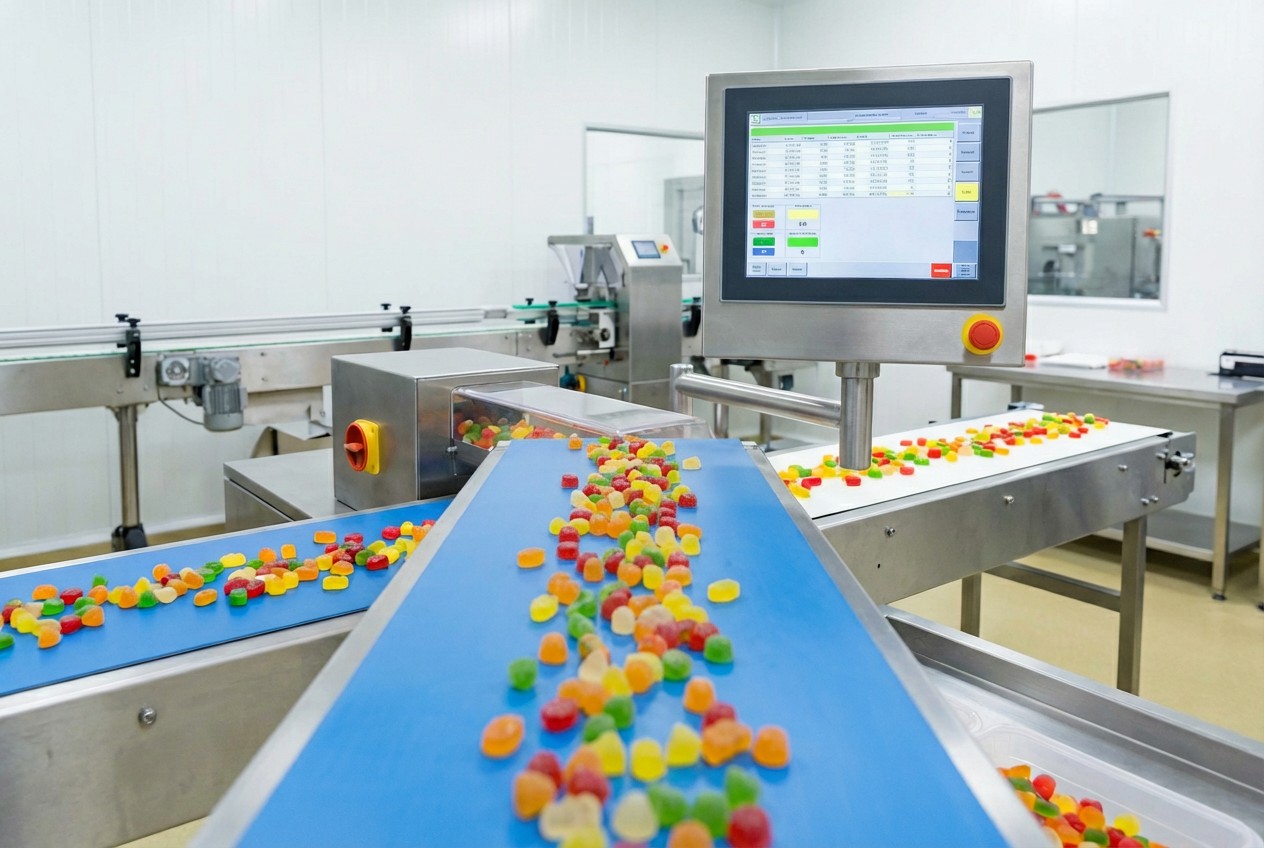
Remember the days when you'd twist open a bottle of vitamin gummies as a kid, counting them out one by one? Back then, the accuracy of how many gummies ended up in each bottle depended entirely on whether the packaging worker's hand happened to twitch. Today, when you pick up a jar of imported gummies, tear open the package, and see a perfectly full, precisely counted batch of candies, there's a good chance a gummy counting machine was working behind the scenes.
Gummy products are fascinating—they're neither neatly shaped tablets nor free-flowing granules. They're soft, sticky, come in wildly irregular shapes, and might be coated in sour sugar or fine powder. This very nature has made counting gummies one of the toughest challenges in the packaging industry. But market demand waits for no one. The vitamin gummy market is projected to grow at a compound annual growth rate exceeding 12.5% from 2020 to 2027, with North America and Asia-Pacific emerging as the fastest-growing consumer markets. Traditional capsule and tablet counters are helpless against gummies, and manual counting? Slow, exhausting, and prone to error.
Enter the gummy counting machine
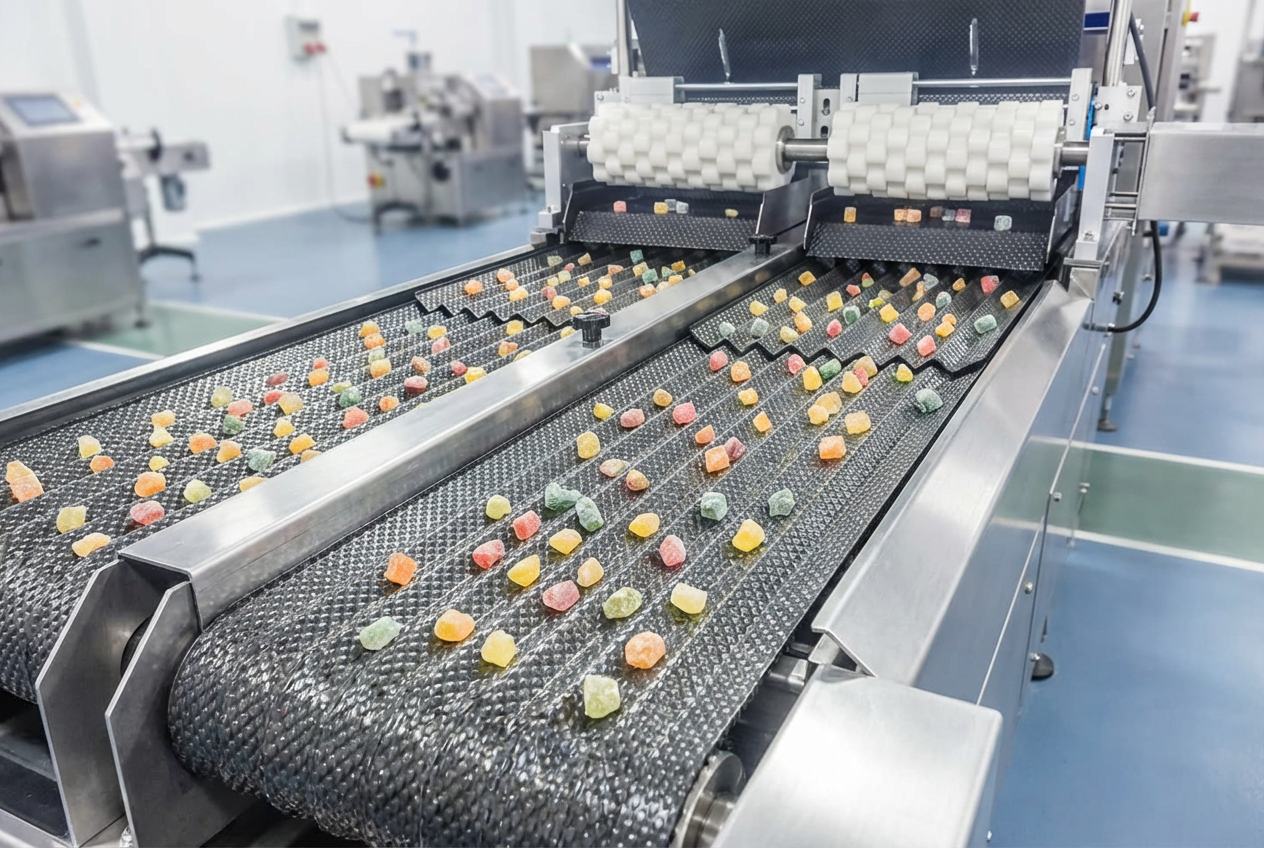
The core challenge of gummy counting lies in separation. Imagine freshly made fruit gummies, clumped together in a sticky mass—until they're separated, no sensor can count them accurately.
A typical gummy counting machine operates in three stages:
Stage 1: Vibratory Alignment
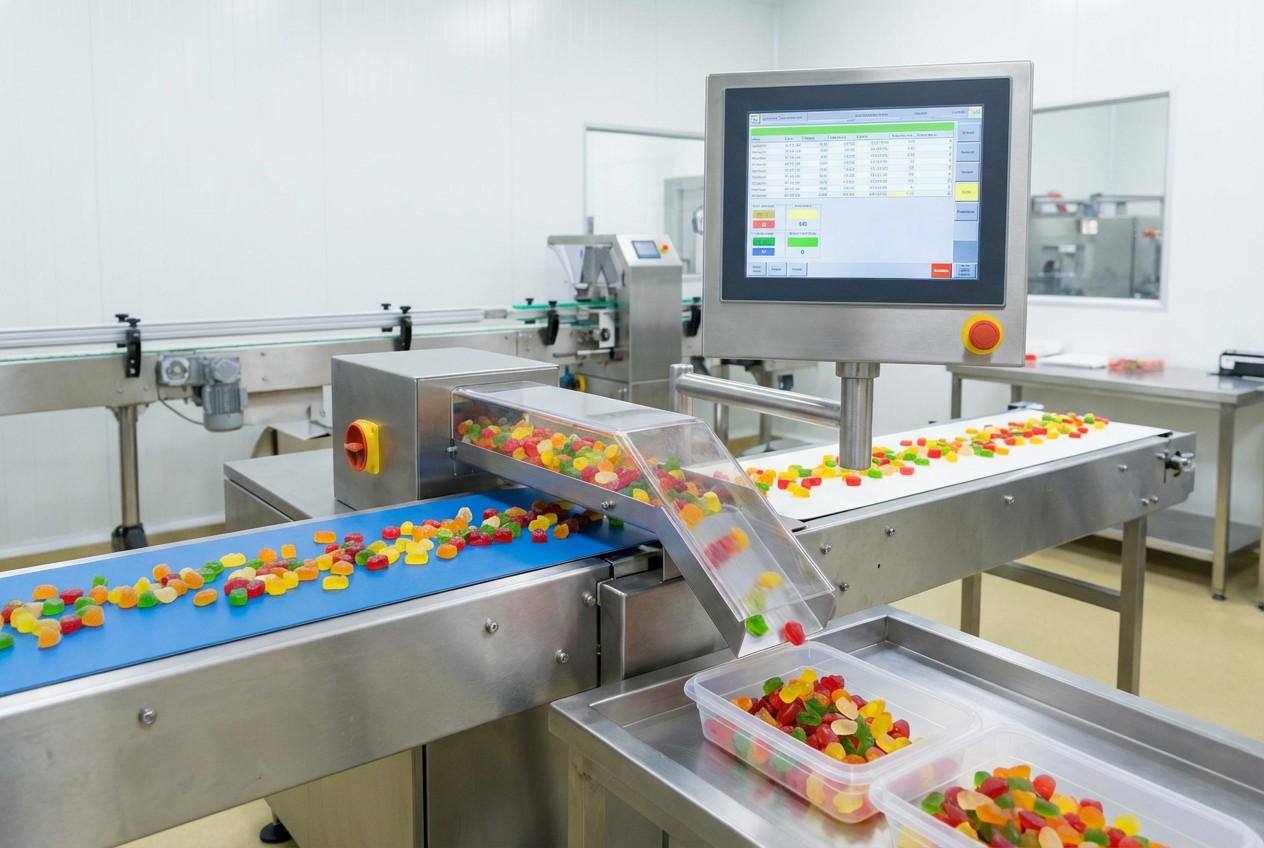
Operators pour bulk gummies into the hopper at the top of the machine. Beneath the hopper sits a vibratory tray with specially textured surfaces. The vibration doesn't just "shake"; it uses micro-amplitude, high-frequency motion to make the gummies "hop" across the tray, gradually aligning themselves into a single layer and feeding into the delivery channels. For particularly sticky gummies, the channel interiors are coated with Teflon or designed with mesh-like surfaces to minimize contact area and prevent adhesion.
Stage 2: Photoelectric or Vision Counting
The separated gummies pass through the detection area one by one. Traditional equipment uses photoelectric sensors—each time a gummy interrupts a light beam, it counts as one. But this method struggles with overlapping or broken pieces.
Newer generation equipment introduces vision counting technology. Industrial cameras capture images of passing products at thousands of frames per second, while AI algorithms identify, count, and automatically reject damaged or irregularly shaped gummies in real-time. Industry data suggests vision counting systems can achieve accuracy rates above 99.9%, maintaining stability even when processing 2,000 gummies per minute.
Stage 3: Precise Dispensing
When the preset count is reached, the control system triggers the dispensing mechanism. Gummies travel through a guide funnel into waiting bottles or pouches below. Throughout the process, the machine synchronizes with upstream and downstream equipment like bottle unscramblers, cappers, and labelers—dispensing only when a bottle is in place, and moving the bottle away only after dispensing is complete. This is the essence of "inline" operation.
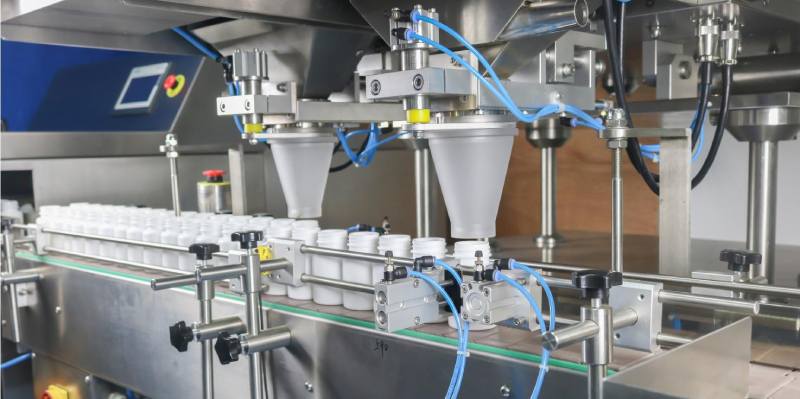
The market offers a wide variety of gummy counting machines, which can be categorized based on operating principles and structure:
| Type | Working Principle | Advantages | Limitations | Best Applications |
|---|---|---|---|---|
| Counting Type (Photoelectric/Vision) | Sensors or cameras detect and count each passing product individually | High speed (up to 3,000+ pieces/min), high accuracy, can identify damage | Sensitive to product clumping, requires regular sensor cleaning | Large-scale production with relatively uniform shapes |
| Weighing Type | Calculates quantity by dividing total weight by average individual weight | Unaffected by product stickiness, ideal for sticky gummies | Slower speeds, requires consistent individual weight | Pharmaceutical, high-precision supplement applications |
| Volumetric Type | Estimates quantity based on volume occupied in a fixed cavity | Simple structure, fast speed | Lower accuracy, sensitive to product density variations | Hard candies with good flowability |
| Hybrid Type | Dual verification combining counting + weighing | Extremely high accuracy, self-calibrating capability | Higher cost, complex structure | Premium brands, products with strict export compliance requirements |
Benchtop Semi-Automatic Machines: Compact and flexible, ideal for startups, lab-scale trials, or small-batch production. Typically require manual bottle placement while the machine handles counting and dispensing.
Fully Automatic Inline Machines: Seamlessly integrate with entire packaging lines—bottles enter automatically, counting and filling occurs, then capping and labeling proceed in one continuous flow. Speeds can reach 40-80 bottles per minute with accuracy as high as 99.97%.
Multi-Head Combination Weighers: Designed specifically for mixed-flavor gummy requirements. For instance, if a bag needs 2 pieces each of strawberry, orange, and apple flavors, six separate weighing heads control and sequence the dispensing. The complexity of such systems far exceeds single-variety counters.
Cremer, a German company with over 30 years of pharmaceutical counting experience, put it bluntly when discussing vitamin gummy counting: "It's easier said than done."
The difficulties stem from three main areas:
1. Stickiness
Gummy surfaces typically contain sugar. During machine operation, minute sugar particles can heat up from friction and melt, forming sticky syrup that adheres to moving parts. Left unaddressed, this can affect accuracy at best and cause complete jams at worst. To counter this, leading manufacturers have developed a range of patented technologies including anti-stick coatings, air-assist systems, and specialized vibration parameters.
2. Irregular Shapes
Bears, worms, little fruits... gummies come in endless irregular shapes. Photoelectric sensors might mistake a "bear's" arm for a separate piece, or allow a sideways-passing "bear" to escape detection entirely. Vision counting systems overcome this by using multi-angle imaging and deep learning algorithms to accurately recognize various irregular products.
3. Softness and Fragility
Gummies are, by definition, soft. Mechanical push-and-block mechanisms can crush them; high-speed dispensing drops can deform them. Therefore, equipment design must balance speed with gentleness—channels need gentle slopes, drop heights must be minimized, and contact surfaces must be smooth.
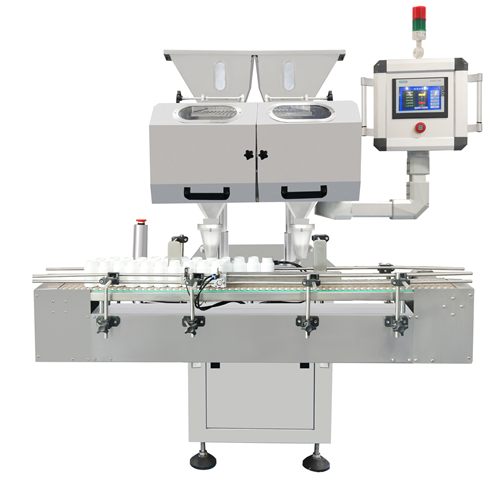
Choosing equipment is like choosing a car—there's no single "best," only what's "most suitable." Here are key dimensions to consider:
Don't just look at the manufacturer's advertised "maximum speed." Ask: What's the accuracy at that speed? Is there third-party test data? The industry-recognized benchmark is: Accuracy ≥ 99.5%, speed matching production line requirements. If speed goes up but accuracy drops to 98%, it means 2 out of every 100 bottles have incorrect counts—and that loss could quickly exceed the price difference of the equipment.
Today you're making gummy bears, tomorrow maybe vitamin gummies, next week perhaps a trial batch of collagen gummies. Can the equipment switch quickly? Does it require hardware changes? Does the software have recipe memory functions? Reducing changeover time from 2 hours to 10 minutes creates a qualitative leap in production efficiency.
There's an iron rule for food-grade equipment: If you can't clean it thoroughly, you can't use it for long. Choose equipment with 304 or 316L stainless steel construction, sealed bearings, rounded welds, and tool-less disassembly. If cleaning a set of channels requires removing 20 screws and takes an hour, operators will eventually find excuses to "skip it."
Will the new equipment stand alone or integrate into an existing packaging line? Are the interface signals compatible? Does it cover your bottle height range? These details determine whether the equipment is "plug-and-play" or a "six-month headache" after purchase.
The gummy industry sees rapid product updates. Can the equipment manufacturer provide remote diagnostics, algorithm updates, on-site training? How fast is the spare parts response? Don't wait until the machine breaks down to discover the manufacturer's phone number is unreachable.
This is the most fundamental and traditional application area. From small workshops to large factories, gummy counting machines help confectionery companies bid farewell to manual counting and achieve standardized packaging. Whether it's gummy bears, cola bottle gummies, or sour-filled burst gummies, there's a suitable machine model available.
This is the fastest-growing and most demanding sector. Vitamin gummies, melatonin gummies, probiotic gummies... consumers aren't just buying a bottle of candy; they're buying into a promise: "Contains 60 gummies per bottle, each with 5mg of active ingredient." In the United States, the FDA has strict regulations regarding dietary supplement label claims. Inaccurate counting can lead to recalls or even lawsuits.
The trendy "surprise box" style candy packaging requires multiple flavors to be packed in the same bag with precise quantities. Traditional single-channel counters are powerless here, requiring specialized multi-head combination systems. For example, one smart weighing company provided a Polish client with a mixed gummy packaging line capable of packing 6 different gummy flavors into one bag according to set proportions, at a speed of 35 bags per minute.
The technological evolution of gummy counting machines is far from over. Looking at trends, several directions are worth watching:
The Rise of Vision Systems: As AI chip costs decrease and algorithms mature, vision counting is transitioning from an "option" to a "standard feature." Future counters won't just count; they'll identify colors, shapes, damage, and foreign materials.
Data Connectivity: Equipment will no longer be isolated but will exchange real-time data with MES (Manufacturing Execution Systems) and ERP (Enterprise Resource Planning) systems via the industrial internet. Which batch had what yield rate, which machine needs maintenance—the system will automatically push alerts.
Flexible Design: One machine adapting to more product types, with changeover times approaching zero. Modular mechanical structures, software parameters switchable with one click.
Stricter Hygiene Standards: As global food regulations tighten, equipment design will increasingly focus on dead-angle-free construction, easy cleanability, and verifiable compliance with certifications like HACCP, GMP, and FDA.
Returning to where we started: the next time you twist open a bottle of gummies, take a moment to consider—behind that simple act, there might have been a machine precisely and flawlessly dropping them in, one by one, at thousands of pieces per minute. It's not magic; it's a精密 orchestration of sensors, algorithms, vibration, and airflow. It's a microcosm of the food industry's journey from "close enough" to "just right."
Gummies may be small, but counting them accurately is no small feat. And that's precisely why gummy counting machines exist.
Q1: What's the difference between a gummy counting machine and a regular tablet counter?
Regular tablet counters are designed for hard, smooth, free-flowing tablets or capsules and cannot handle the stickiness, irregularity, and softness of gummies. Gummy counting machines incorporate specialized anti-stick, anti-damage designs in vibratory feeding, sensor recognition, and dispensing mechanisms.
Q2: How sticky of a gummy can these machines handle?
This depends on the machine's anti-stick features. High-end models use Teflon coatings, mesh channels, air-assist systems, and specialized vibration parameters to handle most commercially available gummy products. However, if gummies have significant surface syrup leakage, pre-cooling or hardening treatment is recommended.
Q3: Can a machine count multiple flavors simultaneously and mix them in one package?
Yes, but it requires specialized multi-head combination systems. Each flavor is controlled by an independent feeding channel, and the system dispenses sequentially according to set proportions, mixing them in the final container. These machines are more complex and costly.
Q4: What does 99.5% accuracy mean in practice?
For a bottle count of 60 gummies, 99.5% accuracy means that on average, 1 out of every 200 bottles might have an incorrect count (either one too many or one too few). For most food companies, this level is sufficient. Pharmaceutical or premium supplement brands typically require 99.9% or higher.
Q5: How often does the equipment need cleaning?
It depends on production frequency and product stickiness. Generally, simple cleaning is recommended after each shift, with deep cleaning once a week. Choosing equipment with tool-less disassembly and rounded welds significantly improves cleaning efficiency.
Q6: Can gummy counting machines be leased?
Some manufacturers offer leasing or installment payment options, particularly suitable for startups or seasonal peak production. However, for the long term, purchasing equipment usually results in lower overall costs.
Q7: How can I tell if an equipment manufacturer is reliable?
Look at their qualifications (relevant industry certifications), case studies (successful experience with similar products), service capabilities (local technical support availability), and reputation (can they connect you with existing customers for真实的 feedback?).
United States Pharmacopeia (USP). (2024). General Chapter <905> Uniformity of Dosage Units. USP-NF.

 Jinhai Plaza, No. 21, Jihua 5th Road, Chancheng District, Foshan City, Guangdong Province, China
  +0757 82252350
  +8618613054883
  manager@gdboanmachine.com