
-
 Call Us +0757 82252350
 -
 Email Us manager@gdboanmachine.com


Why Solids Rule: The Unbeatable Power & Science Behind Popular Pills

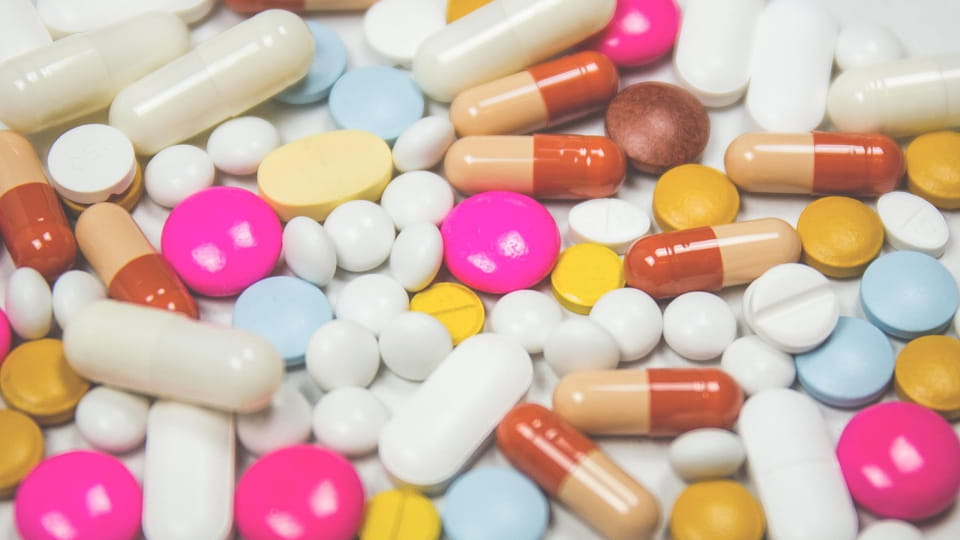
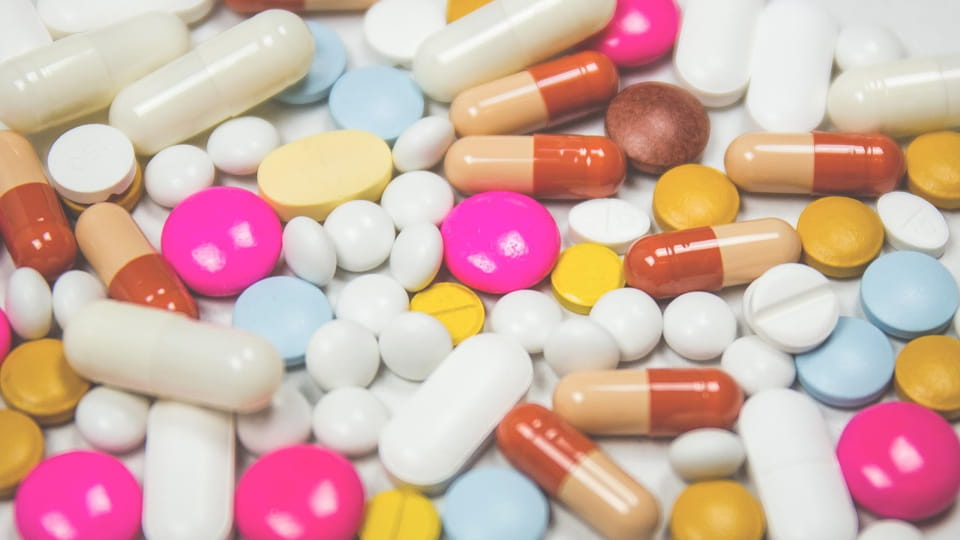
Solid dosage forms, particularly tablets and capsules, command approximately 70% of the pharmaceutical market share. This dominance is underpinned by a powerful logic supported by patient needs, production economics, and scientific stability. This "popularity" is not accidental but an inevitable result of converging advantages.
1. Ultimate Patient Convenience and Compliance Drivers
From the patient's perspective, solid dosage forms offer an unparalleled medication experience. They provide accurate dosing without measurement, simple administration (typically with water), and ease of portability and storage—unlike liquid formulations that often require strict preservation or refrigeration. This convenience directly translates into higher medication adherence, which is crucial for ensuring efficacy in patients with chronic conditions (e.g., hypertension, diabetes). Furthermore, modern formulation technologies (like sustained-release, enteric coating, taste-masking) allow solid forms to further optimize dosing frequency, reduce side effects, and improve palatability.
2. Unparalleled Stability and Cost-Effectiveness
From a pharmaceutical manufacturer's standpoint, stability is paramount. Solid dosage forms (especially dry tablets and capsules) are generally more stable chemically and physically than liquids, with lower sensitivity to temperature, humidity, and light. This directly translates to longer shelf life, simpler storage and transportation requirements, and lower risks of product loss. This opens broader markets for companies, including regions with less developed logistics infrastructure.
At the production level, the advantages of scale for solid dosage forms are immense. Core equipment like high-speed tablet presses and fully automatic capsule filling machines can achieve production speeds of hundreds of thousands or even millions of units per hour. The per-unit production cost is significantly lower than for injectables requiring complex sterile filling or liquids requiring precise dispensing. This high efficiency yields substantial economies of scale.
3. Flexibility in Formulation Design and Technological Extensibility
Solid dosage forms serve as a highly flexible technological platform. Diverse therapeutic goals can be achieved by adjusting the formulation and process:
Controlled Release: Technologies like multi-layer compression or pellet coating enable once-daily sustained/modified-release tablets, improving patients' quality of life.
Targeted Delivery: Enteric coatings protect drugs from stomach acid or reduce gastric mucosal irritation.
Improved Compliance: Developing chewable tablets, orally disintegrating tablets (ODTs) serves pediatric, geriatric, or dysphagic patient populations.
This flexibility allows a single Active Pharmaceutical Ingredient (API) to be developed into multiple products meeting different clinical needs, maximizing its market value.
(I) Mechanism of Action: The Journey from Pill to Effect
The core pathway for oral solid dosage forms is: Administration → Disintegration → Dissolution → Absorption → Effect.
Disintegration: The tablet or capsule shell rapidly breaks apart in gastrointestinal fluids into fine particles or powder.
Dissolution: The API dissolves from the particles into the gastrointestinal fluid. The dissolution rate is a key step influencing the speed of drug absorption and a major focus of formulation development.
Absorption: The dissolved drug molecules are absorbed through the gastrointestinal mucosa into systemic circulation, distributing throughout the body to exert therapeutic effects.
Specialized dosage forms follow different paths: Orally Disintegrating Tablets (ODTs) break down rapidly in the mouth, allowing some drug absorption via the oral mucosa; Enteric-coated tablets remain intact in the stomach, disintegrating and releasing their contents only upon reaching the specific pH environment of the intestine.
(II) Manufacturing Process: Precision Engineering from Raw Material to Finished Product
Solid dosage form manufacturing is a highly automated, continuous process line. The core objective is to ensure that every single tablet is identical in potency, quality, and efficacy.
Step 1: Pre-processing and Blending
The API and various excipients (fillers, disintegrants, lubricants, etc.) are precisely weighed and charged into a high-efficiency mixer/blender for uniform mixing. This is the first guarantee of content uniformity.
Step 2: Granulation
The blended powder often has poor flowability and is prone to segregation, making it unsuitable for direct compression. Granulation improves these properties by increasing particle size.
Wet Granulation: A binder solution is added to the powder mix, forming wet granules in a high-shear granulator. These are then dried and sized in a fluidized bed dryer. This is the most common method, improving compressibility and content uniformity.
Dry Granulation: For APIs sensitive to heat and moisture, a dry granulator (or roller compactor) is used, compressing the powder into ribbons under high pressure, which are then milled into granules.
Step 3: Compression (Tableting)
This is the core step for tablet formation. The granules are fed into the die cavities of a rotary tablet press. Under immense pressure from the upper and lower punches, they are compacted into tablet cores of specified shape and hardness. Modern high-speed presses are equipped with in-line weight monitoring and pressure sensing systems to ensure real-time control of weight variation and hardness.
Step 4: Coating
Many tablets require coating. A coating pan or, more advanced, a perforated pan coater tumbles the tablet cores uniformly while spraying a coating solution and drying with heated air, forming a thin, even film over the core. Coating can achieve taste-masking, moisture protection, light protection, color distinction, or functional goals like enteric or sustained release.
Step 5: Capsule Filling
For capsules, the blended or granulated material is fed into a fully automatic capsule filling machine. This equipment precisely performs capsule shell separation, filling, locking, and ejection at high speeds.
Step 6: Primary Packaging and Quality Control
Finished products undergo rigorous quality control testing (potency, dissolution, hardness, etc.) before entering the packaging line. Blister packaging machines or bottling lines seal the product from the external environment, providing final protection. Throughout the process, the application of Process Analytical Technology (PAT), such as real-time Near-Infrared (NIR) spectroscopy monitoring, is becoming a key trend in ensuring consistent quality.
Q1: What are the main differences in production equipment between sustained-release tablets and immediate-release tablets?
A1: The main differences lie in the granulation and compression stages. Sustained-release tablets often require a fluidized bed granulator/coater capable of producing coated pellets or granules for controlled release. For compression, a multi-layer tablet press may be needed to combine immediate-release and sustained-release layers.
Q2: What are the primary factors to consider when choosing between wet granulation and dry granulation?
A2: The choice depends mainly on the API's properties. If the API is stable to heat and moisture, wet granulation produces granules with better compressibility. If the API is unstable under湿热 conditions, or if the formulation has adequate flowability, dry granulation is preferred to save energy and process steps.
Q3: What are the most common quality risk points in solid dosage form manufacturing?
A3: Key risks include: Inadequate mixing leading to content non-uniformity; Variations in tablet weight or hardness during compression; Uneven coating affecting appearance or functionality; and Cross-contamination. These are managed through equipment qualification, stringent process controls, and in-line monitoring.
Q4: What equipment selection advice is there for small-batch, multi-product development or production?
A4: Priority should be given to modular, easy-to-clean, and quick-changeover equipment. Examples include compact multi-purpose fluidized bed processors (integrating granulation, drying, coating), easily disassembled mixers, and tablet presses. These maximize flexibility and minimize cleaning time and cross-contamination risk between batches.
Q5: What are the future trends in solid dosage form manufacturing?
A5: Two trends are particularly prominent: First, Continuous Manufacturing, which connects individual unit operations into a continuous line with real-time monitoring and adjustment, offering greater efficiency and more consistent quality than traditional batch processing. Second, Digitalization and Smart Manufacturing, utilizing sensors and AI to analyze production data for predictive maintenance and self-optimizing processes.

 Jinhai Plaza, No. 21, Jihua 5th Road, Chancheng District, Foshan City, Guangdong Province, China
  +0757 82252350
  +8618613054883
  manager@gdboanmachine.com