
-
 Call Us +0757 82252350
 -
 Email Us manager@gdboanmachine.com


Why Pharmaceutical Blister Packaging is More Than Just a Bubble: A Technical Deep Dive
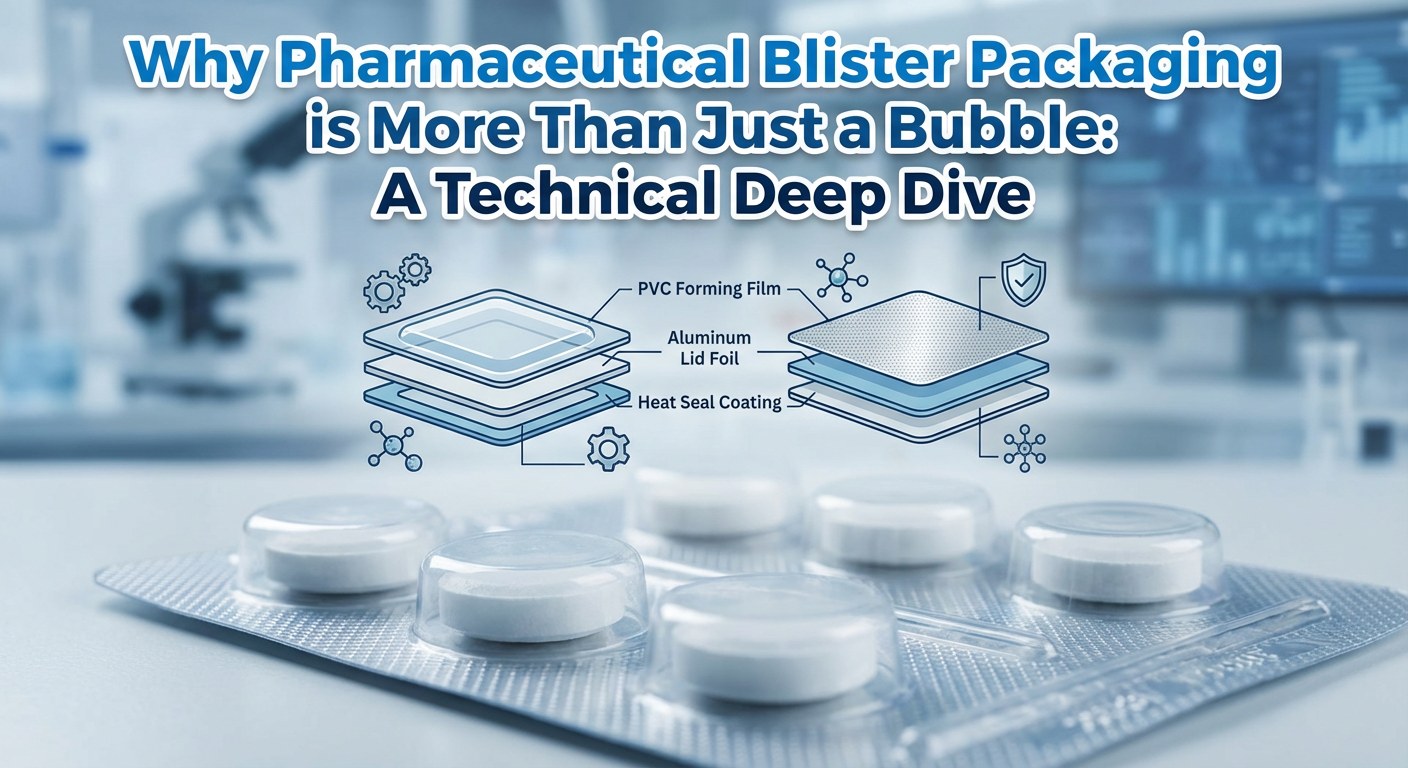
In the pharmaceutical industry, packaging is far from being a mere final shell for products; it is a critical extension of a drug's lifecycle and the ultimate barrier ensuring that efficacy safely reaches the patient. Blister packaging, the dominant form for solid oral dosage forms, involves far more complexity than simply combining plastic and foil. It represents an integrated technology converging materials science, mechanical engineering, and pharmaceutical needs. This article delves into the technical essence of blister packaging and analyzes how advanced equipment from manufacturers like Boan Machine provides reliable solutions for global pharmaceutical companies through innovative technology.
The essence of blister packaging is to construct an independent micro-environmental protection system for each unit dose of medication. Its core value manifests in three dimensions:
Ultimate Protection: The three major adversaries of drugs—moisture, oxygen, and light—are primary causes of active ingredient degradation and efficacy loss. High-quality blister packaging creates a near-physically isolating barrier through materials and sealing processes. For instance, the water vapor transmission rate of the blister is a key determinant for the shelf life of highly hygroscopic drugs.
Medication Safety & Adherence: The unit-dose design inherently prevents mix-ups and misuse. Clear date markings help patients manage their treatment course, while the robust seal serves as intuitive evidence of tampering, enhancing safety throughout the journey from production line to patient.
Production & Supply Chain Efficiency: Automated blister packaging lines can seamlessly integrate with high-speed tablet presses and capsule fillers, enabling efficient, continuous large-scale production. The standardized blisters also optimize storage and logistics space.
The choice of packaging material is a strategic decision based on a deep understanding of the drug's physicochemical properties. The market primarily follows two technological paths:
Aluminum-Plastic Blister (Thermoforming):
Process: Uses plastic films like Polyvinyl Chloride (PVC) or higher-performance Polychlorotrifluoroethylene (Aclar) as the base web, which is heated and vacuum-formed over a mold, then heat-sealed with pharmaceutical-grade aluminum foil.
Advantages: Cost-effective, good transparency (facilitating visual inspection), fast forming speed, and mature technology.
Limitations: Barrier properties against moisture and oxygen, even when improved (e.g., with PVDC coating), are significantly lower than those of aluminum. Primarily suitable for stable drugs insensitive to humidity and oxygen.
Aluminum-Aluminum Blister (Cold Forming):
Process: Uses pure aluminum foil stamped into shape at room temperature under immense pressure (cold forming), then sealed to another layer of aluminum foil (typically laminated with a polymer heat-seal layer).
Advantages: Provides the highest barrier performance currently available. Aluminum itself is an absolute barrier to water, oxygen, and light, allowing even the most sensitive, high-value drugs (e.g., some biologics, antibiotics) to remain stable under challenging conditions.
Limitations: High cost, significant equipment investment, and opacity.
Technical Insight: Material selection is not a simple matter of "good" versus "bad" but rather of "matching." A common misconception is the blind pursuit of high barriers. In fact, for the vast majority of drugs stable under normal conditions, high-performance aluminum-plastic packaging (e.g., using Aclar) is entirely sufficient and balances cost with transparency needs. Aluminum-aluminum packaging is a tool for "extreme challenges," not a standard requirement.
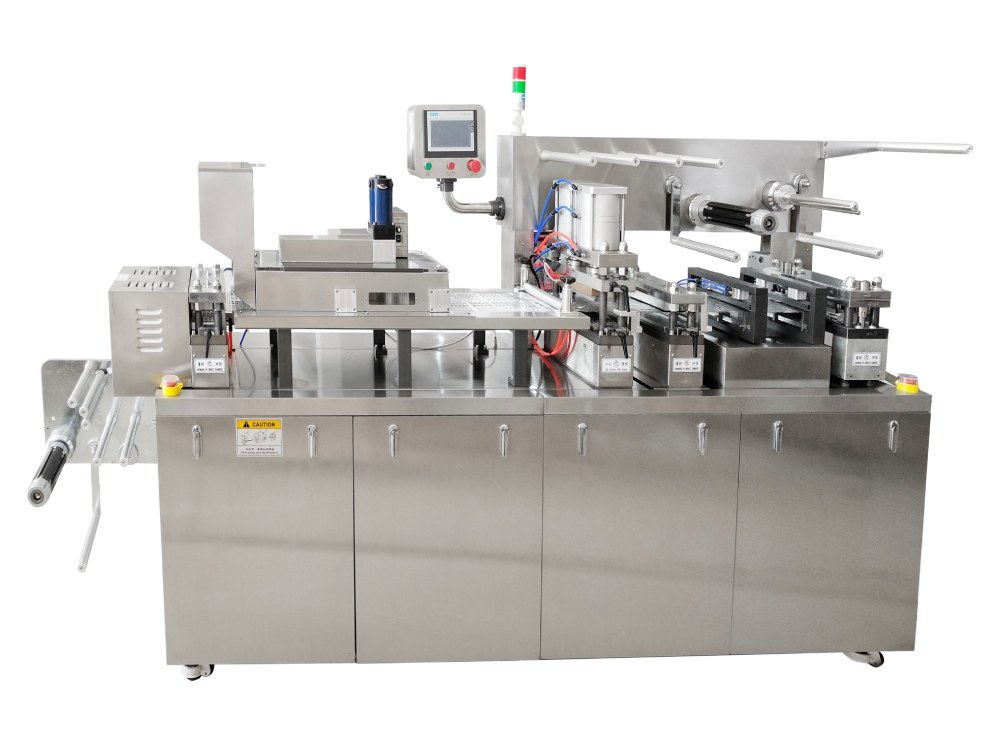
Transforming quality materials into stable, reliable packaging critically depends on the performance of the core equipment. The technological advancement of Boan Machine's typical aluminum-plastic blister packaging machines (e.g., the DPP series) is reflected in the systematic resolution of three core demands: "precision, efficiency, and compliance."
Synchronization Precision & Modular Intelligence:
Modern servo-drive technology has largely replaced traditional mechanical transmission. All workstations (forming, filling, heat-sealing, punching) are driven by servo motors, achieving nanometer-level synchronization via a central control system (e.g., Siemens PLC). This ensures that every blister pocket aligns perfectly with the foil sealing position, even at speeds of hundreds of blisters per minute.
The modular "quick-change" mold system is key to enhancing flexibility. A single machine can adapt to different pill shapes and sizes by changing molds, reducing format changeover time from hours to minutes, greatly meeting the needs of flexible, multi-variety, small-batch production.
Precision Control in Forming and Sealing Processes:
Forming: Employs a combined "positive-pressure pneumatic + mechanical mold-assist" forming technology. Compressed air evenly presses the heated, softened plastic web against the mold, followed by final shaping with a mechanical punch, ensuring full forming of complex shapes or deep pockets (e.g., for capsules, medical devices) with uniform wall thickness and no weak stress points.
Heat-Sealing: The heat-sealing station utilizes multi-zone independent temperature and pressure control. To achieve the precise "push-through force" design on the foil (easy to push but not leak), the equipment can accurately deliver the required temperature and pressure, ensuring firm seal with consistent "push feel).
GMP-Compliant Design Throughout:
Parts directly or indirectly contacting the product are made of materials like 316L stainless steel, which are non-shedding, corrosion-resistant, and easy to clean.
The design incorporates dust-free principles: fully enclosed protective covers, internal negative pressure dust extraction systems, and smooth rounded corners eliminate cleaning dead zones, meeting the stringent cleanliness requirements of modern pharmaceutical workshops.
Integrated online inspection systems (e.g., missing pill detection, visual inspection of batch printing, seal integrity check) automatically reject non-conforming products, ensuring 100% (qualified outgoing packaging) with complete and traceable data.
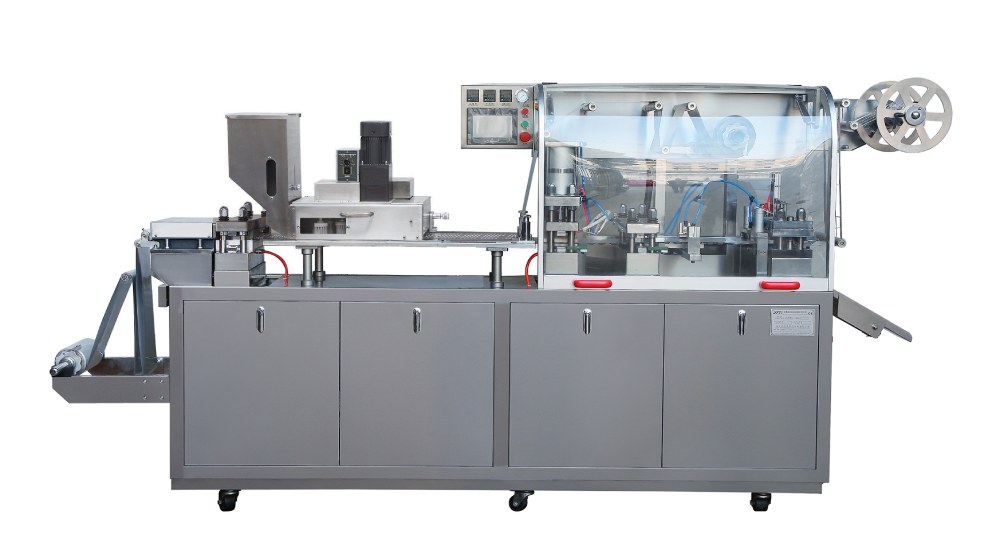
Pharmaceutical companies should adopt a systematic decision-making logic when planning packaging lines:
Prioritize Drug Characteristic Analysis: The primary task is to clarify the drug's sensitivity (hygroscopicity, photosensitivity, oxygen sensitivity) and the climatic conditions of the target market along with the shelf-life required by regulations.
Interlinked Selection of Material and Process: Based on the analysis, make a fundamental choice between "Alu/PVC" and "Alu/Alu." This directly determines the type of packaging machine required (thermoformer or cold former).
Comprehensive Evaluation of Equipment Effectiveness: Focus on the equipment's Overall Equipment Effectiveness (OEE), changeover efficiency, energy consumption, and long-term operational stability. For example, the "dual-use" design (compatible with both Alu/PVC and Alu/Alu) offered by models like Boan Machine's DPP-270 provides invaluable flexibility for R&D-focused pharma companies or CDMOs.
Consideration for Future Scalability: Is the equipment easy to integrate with upstream fillers and downstream cartoners? Does the control system support Industry 4.0 data interface? These factors concern the future upgrade and intelligentization potential of the production line.
Q: For blister-packed medication, does the expiration date count from the production date or the opening date?
A: The expiration date is based on stability studies of the drug in its unopened, intact blister. Once the blister is punctured, exposing the drug to the environment, its stability can no longer be guaranteed, and it should be taken promptly. The date marked on the blister refers to the date by which the product can be used provided the packaging remains intact.
Q: Which is better, aluminum-plastic blister packaging or traditional plastic prescription bottles?
A: They have different emphases. Blister packaging provides unit-dose ultimate barrier protection; each dose removal does not affect the remaining pills. Prescription bottles (multi-dose containers) expose all contents to humidity and temperature fluctuations with each opening. For sensitive drugs, blister packaging holds a clear advantage.
Q: Why is cold-formed aluminum-aluminum packaging so expensive?
A: Three main reasons: First, the aluminum foil itself is costly. Second, cold forming requires enormous pressure (up to hundreds of tons), leading to high equipment cost and energy consumption. Third, the forming speed and yield are typically lower than those of thermoforming processes.
Q: How long does equipment mold changeover and adjustment usually take?
A: Thanks to advanced modular design, a skilled operator can complete the changeover of main molds and basic adjustment within 30-60 minutes. Faster mold change systems (SMED) can further reduce this time to under 20 minutes.
Q: How to verify if the blister seal is truly intact?
A: The industry has standard testing methods, such as the dye penetration test (negative pressure with colored solution) or high-precision leak detectors (using vacuum decay or pressure change principles). Online vision inspection systems can also provide indirect judgment by analyzing the pattern consistency of the sealed area.
Q: What are common failure points in blister packaging machines? How to prevent them?
A: Common issues include poor heat seal (check temperature, pressure, foil coating), poor forming (check heating temperature, air pressure, mold cleanliness), and burrs during punching (check mold cutting edge wear). A strict Preventive Maintenance (PM) schedule, including regular cleaning, lubrication, and inspection of critical components, is key to ensuring stable machine operation.
Q: For irregularly shaped tablets (e.g., heart-shaped, large oval), what special considerations are needed in packaging?
A: Irregular tablets require custom molds, with particular attention to the fit between the pocket shape and the tablet to avoid being too tight (causing chipping) or too loose (allowing tablet movement and breakage). The feeding tracks also need specialized design to ensure smooth, oriented feeding.
Q: How environmentally friendly is blister packaging? What about the use of PVC?
A: This is an important industry topic. Unit-dose packaging reduces medication waste, but material recycling is challenging. The industry is actively exploring the use of more easily recyclable mono-materials (e.g., PP, PET) or biodegradable materials. For PVC, its use in compliant pharmaceutical grades is safe, and due to its excellent formability and cost, it remains mainstream. However, the development of alternative materials is a clear trend.
Q: Our production line needs to reach 300 blisters per minute. How should we select the model?
A: Ultra-high-speed lines require comprehensive high-performance configurations: ultra-high-speed servo systems, stable feeding technology over very short distances, rapid heat-seal cooling systems, and matching inspection and rejection response speeds. This is not just about host machine speed but also the ultimate test of the entire system's synchronization and stability, requiring in-depth engineering discussions with the equipment supplier.
Q: When cooperating with an equipment supplier, what support should we focus on besides the machine itself?
A: Key focus areas should include: ① Validation Support: Ability to provide complete Factory Acceptance Test (FAT), Site Acceptance Test (SAT), and assistance with drafting IQ/OQ/PQ documents. ② Training System: Whether hierarchical training for operation, maintenance, and programming is provided. ③ Spare Parts & Remote Support: Availability of global spare parts inventory and the effectiveness of remote diagnostic systems.
National Medical Products Administration (NMPA). Aluminum Foil for Pharmaceutical Packaging (YBB Standards).
National Medical Products Administration (NMPA). Guidelines for Compatibility Testing of Pharmaceutical Packaging Materials and Drugs.
International Council for Harmonisation of Technical Requirements for Pharmaceuticals for Human Use (ICH). Q1A(R2): Stability Testing of New Drug Substances and Products.
U.S. Food and Drug Administration (FDA). Guidance for Industry: Container Closure Systems for Packaging Human Drugs and Biologics.
European Pharmacopoeia (Ph. Eur.). Monographs on Materials for Containers.
Lehmann, K. O. R. Blister Packaging: Principles and Technology. Pharmaceutical Technology, Series of Featured Articles.
Boan Machine DPP Series Automatic Blister Packaging Machine Technical Manual and Validation Guide (Internal Engineering Documentation).
PDA Technical Report No. 27. Pharmaceutical Package Integrity.
As the above analysis shows, blister packaging is a deeply interdisciplinary field, whose development consistently revolves around the of "more precise protection, more efficient production, and more intelligent control." For pharmaceutical enterprises, choosing the right packaging technology and equipment partner is a crucial part of building core competitiveness in the holistic lifecycle management of drugs.

 Jinhai Plaza, No. 21, Jihua 5th Road, Chancheng District, Foshan City, Guangdong Province, China
  +0757 82252350
  +8618613054883
  manager@gdboanmachine.com